
{{First_Name|Explorer}}, welcome back!🚀
This week I would implore the reader to head over to the governance and defense sections, lots of unprecedented developments. And as always some breathtaking images and plenty of new updates from commerce. Click the link below to read the unclipped publication. ↓
Hope you enjoy this Space!

IMAGES
NASA Astronauts Suit-Up in Axiom’s New SpaiceSuit in Prep for Artemis III

NASA astronauts have begun underwater training with the Axiom Extravehicular Mobility Unit (AxEMU), the next‑generation spacesuit designed for Artemis lunar missions. In the dual-suit run, conducted at the Neutral Buoyancy Laboratory in Houston, the tests simulated microgravity conditions, allowing two astronauts to rehearse movement, problem‑solving, and equipment handling in conditions that closely mimic the Moon’s surface. The AxEMU, developed by Axiom Space with NASA, offers improved mobility, modularity, and life‑support systems compared to legacy suits. These trials are in preparation for the Artemis III mission, which aims to land astronauts at the lunar south pole. (Credit: NASA)
Volcanic Plume, Hayli Gubbi Volcano Northeast Ethiopia : Copernicus Sentinel-5P & EUMETSAT

The Hayli Gubbi volcano in northeast Ethiopia, dormant for nearly 12,000 years, erupted on 23 November 2025, releasing a vast plume of ash and sulfur dioxide into the atmosphere. EUMETSAT's Meteosat-12 captured the ash plume spreading across the region. (Credit: EUMETSAT, 2025)

Captured by the Copernicus Sentinel‑5P satellite, the two images show the plume drifting eastward toward the Arabian Peninsula and later dispersing along the coasts of Yemen, Oman, and the Arabian Sea. (Credit: contains modified Copernicus Sentinel data (2025), processed by ESA)

The sudden event sent towering plumes of ash and gas into the atmosphere, visible from space. Satellite images showed the plume drifting eastward across the Red Sea toward Yemen and Oman. Local communities in the Afar region reported heavy ashfall, while airlines canceled flights due to hazardous conditions. Scientists note that such explosive activity is unusual for a shield volcano, which typically produces slower lava flows rather than massive ash clouds.
The Hayli Gubbi eruption marks its first known activity during the Holocene, the geological epoch that began about 11,700 years ago after the last ice age. Volcanoes without eruptions in this period are typically classified as extinct. (Credit: EUMETSAT, 2025)
Satellite Tracks Shrinking Antarctic Ice

Antarctic sea ice reached its third‑lowest winter maximum in 47 years of satellite records, continuing a trend of reduced coverage since 2016.
On September 17, 2025, ice extent measured 17.81 million square kilometers/6.88 million square miles, about 900,000 square kilometers/348,000 square miles below the 1981–2010 average. Scientists caution that the Antarctic system’s complexity makes long‑term predictions difficult, with factors such as ocean temperatures, winds, and regional variability influencing outcomes. While it remains unclear whether diminished growth will persist, researchers stress that monitoring is essential, as sustained declines could reshape global climate dynamics and polar ecosystems. (Credit: Michala Garrison, using data from the National Snow and Ice Data Center.)

The map depicts Antarctic sea ice extent on September 17 (white) compared with the 1981–2010 average for the same date (yellow line). To measure extent, scientists divide the ocean into a grid and total the areas of cells where ice covers at least 15 percent. (Credit: Michala Garrison, using data from the National Snow and Ice Data Center.)
Circumpolar Startrail : Osvaldo Castillo, Chilean Astrophotographer

ESO’s Paranal Observatory in Chile has become the backdrop for a striking demonstration of Earth’s rotation, captured in a long‑exposure image of circumpolar startrails. The celestial pole marks the point in the sky where Earth’s rotation axis projects. In this image, it forms the center around which the stars appear to circle, creating the effect known as a circumpolar startrail.
Photographer Osvaldo Castillo recorded nearly 300 exposures over several hours, later combining them to reveal concentric arcs of starlight centered on the southern celestial pole. The alignment of one of the observatory’s Auxiliary Telescopes with this pole creates the illusion of the sky revolving around the instrument. The image illustrates both the technical challenges of astrophotography and the precision of Paranal’s facilities, highlighting how ground‑based observatories contribute to public engagement alongside scientific discovery. (Credit: O. Castillo/ESO)
A Possible Meteorite on Mars : Perseverance Rover
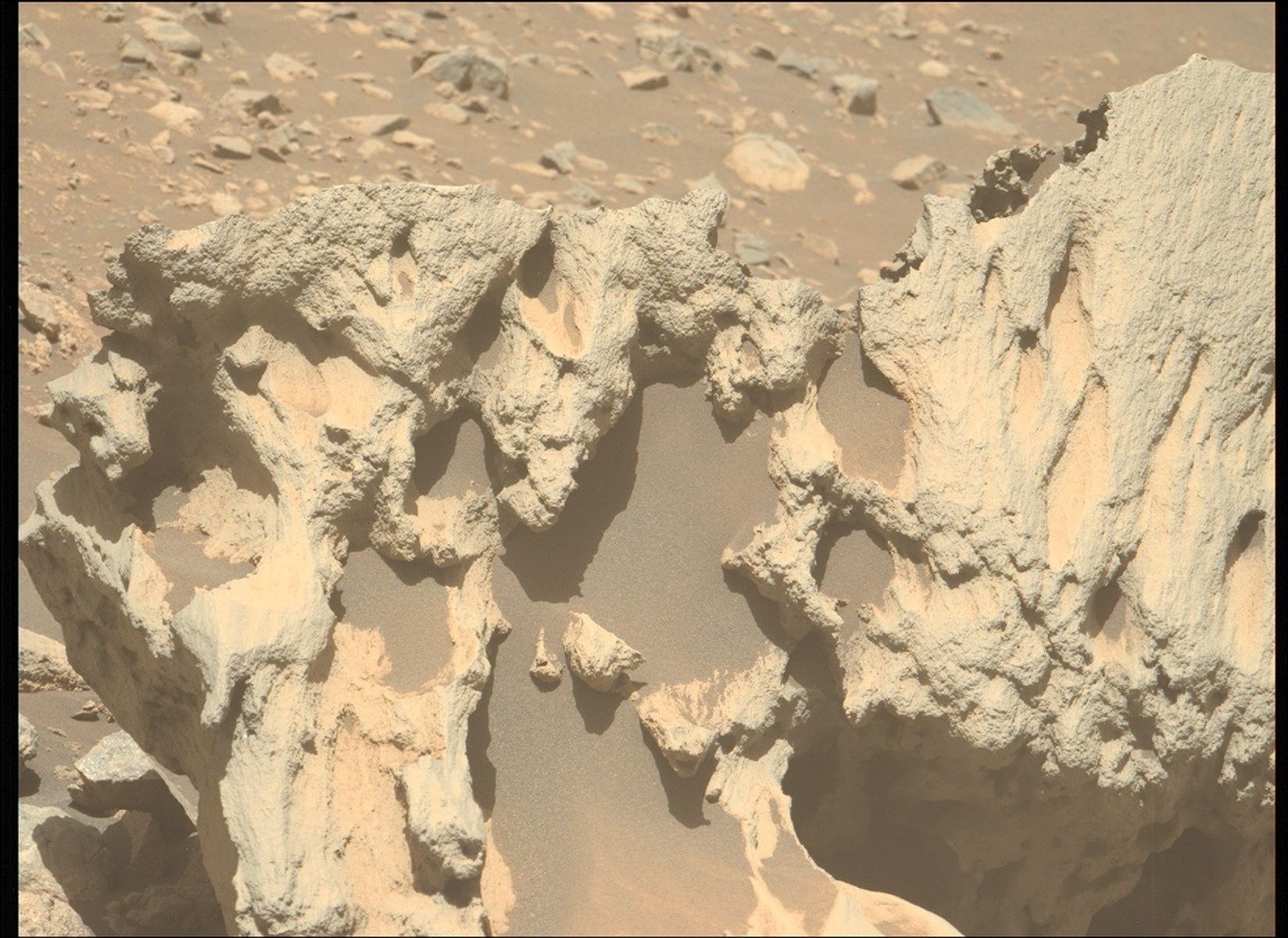
NASA’s Perseverance rover has identified an unusual rock on Mars that may be a meteorite. On September 19, 2025 (Sol 1629), Perseverance captured close‑up images of “Phippsaksla,” a sculpted, high‑standing rock distinct from surrounding terrain near Jezero crater’s rim. Analysis with Mastcam‑Z and SuperCam revealed high iron and nickel content, consistent with iron‑nickel meteorites formed in asteroid cores. While Curiosity and earlier rovers found similar meteorites, Perseverance had not until now, raising questions about distribution across Martian sites. Scientists caution further study is needed to confirm its origin. (Credit: NASA/JPL-Caltech/ASU)
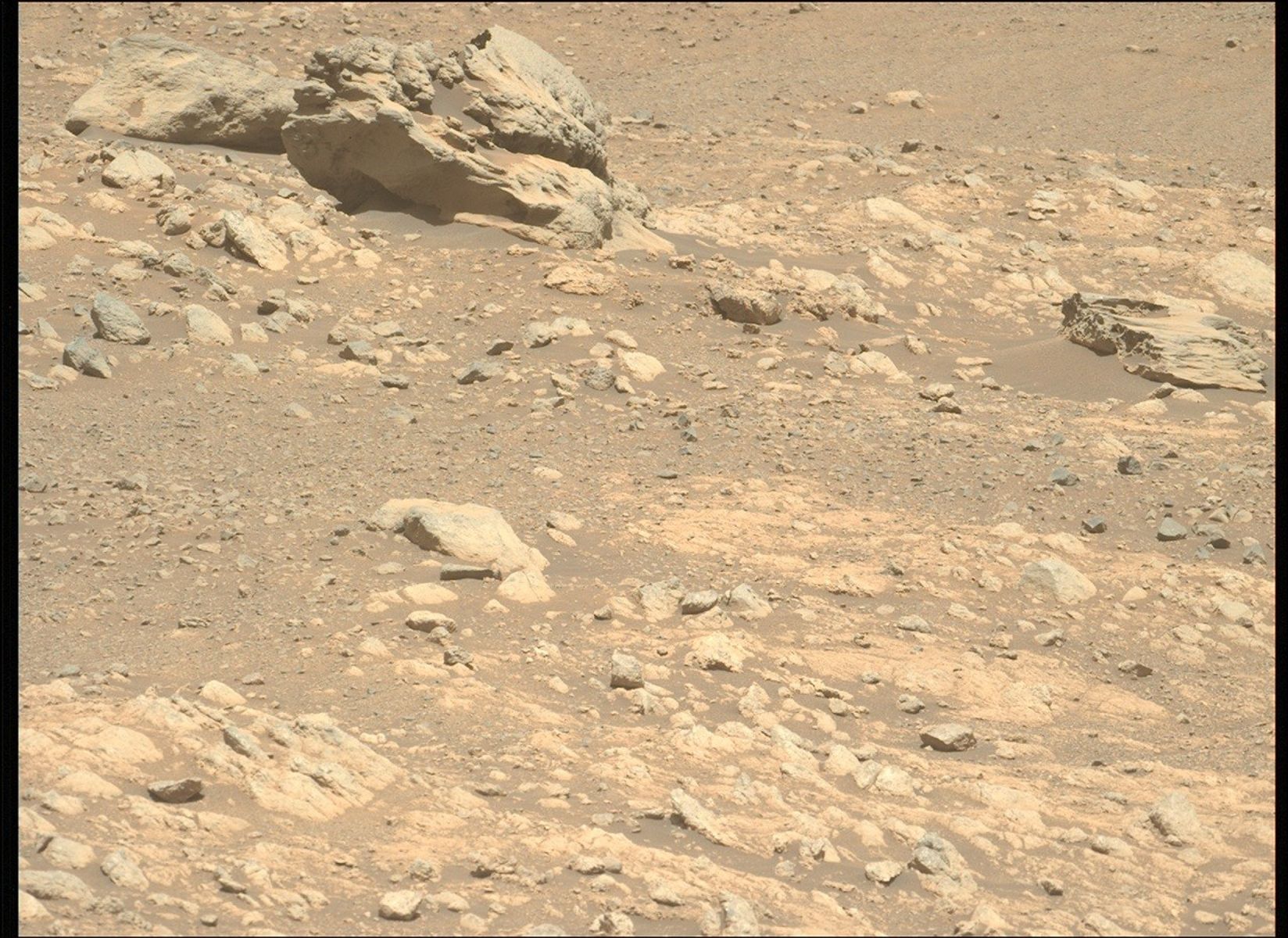
On September 2, 2025 (Sol 1612), NASA’s Perseverance rover used its Left Mastcam‑Z camera to capture an image of “Phippsaksla,” an unusually shaped rock visible at the upper left. Its high iron and nickel content suggests it may be a meteorite. (Credit: NASA/JPL-Caltech/ASU)
OSIRIS-APEX Spacecraft Slingshots Past Earth : NASA
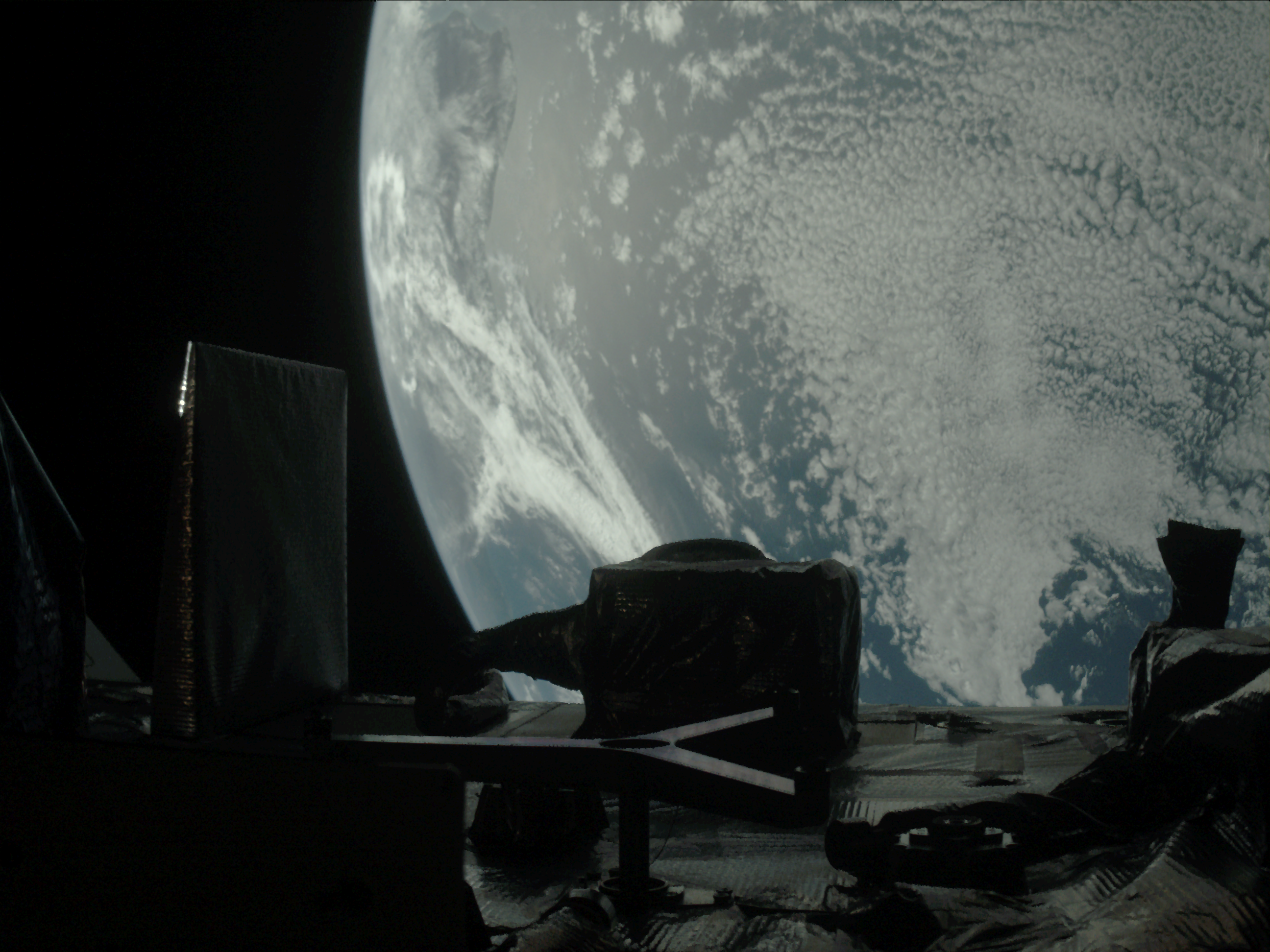
NASA’s OSIRIS‑APEX spacecraft completed a close Earth flyby on September 23, 2025, passing just 3,438 kilometers above the planet to gain momentum for its journey to asteroid Apophis.
During the maneuver, the spacecraft captured images of Earth and the Moon using its MapCam and StowCam instruments, providing calibration data for upcoming observations. Originally OSIRIS‑REx, the mission returned samples from Bennu before being redirected to study Apophis after its 2029 close approach. To verify safe storage of asteroid sample during OSIRIS-APEX’s primary mission, StowCam captured both still and video imagery. Managed by NASA’s Goddard Space Flight Center with contributions from the University of Arizona, Lockheed Martin, and CSA, OSIRIS‑APEX exemplifies extended mission planning and international collaboration. (Credit: NASA/Goddard/University of Arizona)

As OSIRIS‑APEX flew roughly 2,100 miles above Earth, which is higher than typical low‑orbit satellites, it captured a sequence of 424 StowCam images assembled into a video. The footage shows the spacecraft’s instrument deck in the foreground and Earth below, with the Atlantic Ocean beneath and South America visible to the left. (Credit: NASA/Goddard/University of Arizona/Lockheed Martin)
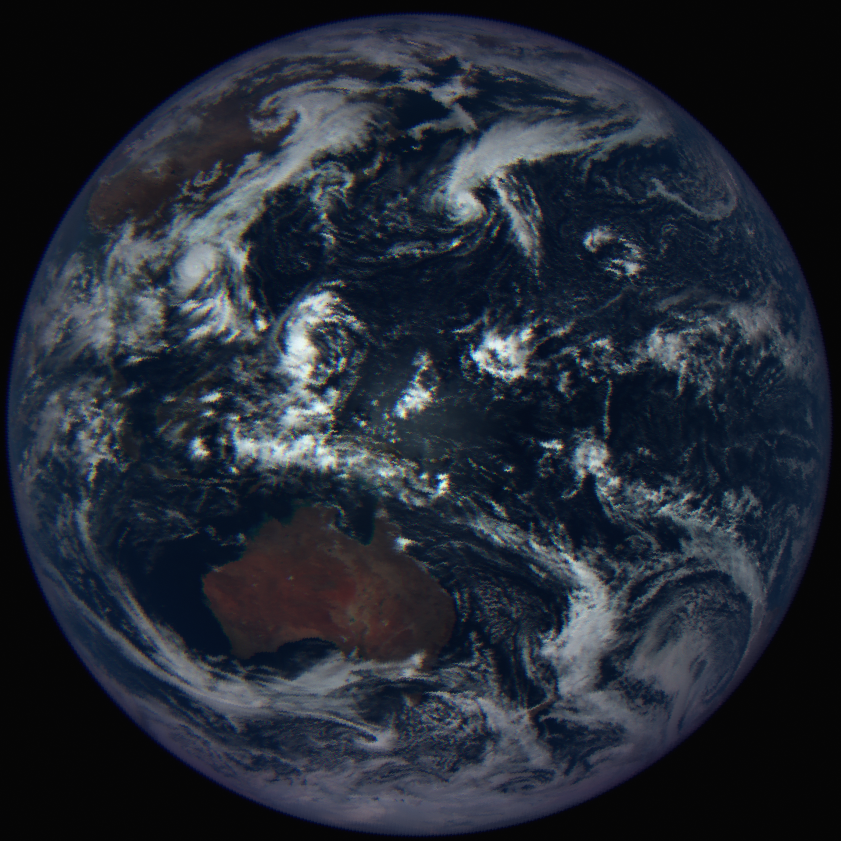
About nine hours after its closest approach, OSIRIS‑APEX captured this view of Earth from 142,000 miles (228,000 km) away as it moved outward. Australia is visible in the Southern Hemisphere. The color composite merges six MapCam images taken through red, green, and blue filters. MapCam is part of the OSIRIS‑REx Camera Suite (OCAMS), operated by the University of Arizona. (Credit: NASA/Goddard/University of Arizona)
The Butterfly Nebula : Gemini South, International Gemini Observatory

Gemini South marked its 25th anniversary with a new image of the Butterfly Nebula, highlighting both scientific progress and public engagement. Located in Chile, the 8.1‑meter telescope captured NGC 6302, a bipolar planetary nebula about 2,500–3,800 light‑years away in Scorpius. The nebula’s dramatic “wings” are remnants of a massive star that shed its outer layers over 2,000 years ago, now visible as energized hydrogen and oxygen gas heated by an extremely hot white dwarf. Students in Chile selected the target as part of an anniversary contest, underscoring the observatory’s role in education and outreach alongside its contributions to astrophysical research. (Credit:
International Gemini Observatory/NOIRLab/NSF/AURA; Image Processing: J. Miller & M. Rodriguez (International Gemini Observatory/NSF NOIRLab), T.A. Rector (University of Alaska Anchorage/NSF NOIRLab), M. Zamani (NSF NOIRLab))

SCIENCE
Next‑Generation Roman Space Telescope Shows Capabilities Beyond Original Mission Goals

NASA’s Nancy Grace Roman Space Telescope’s three main observing programs, highlighted in this infographic, can enable astronomers to view the universe as never before, revealing billions of cosmic objects strewn across enormous swaths of space-time. (Credit: NASA’s Goddard Space Flight Center)
NASA’s Nancy Grace Roman Space Telescope, still years from launch, is already reshaping expectations of what next‑generation observatories can deliver.
Originally designed to probe dark energy and exoplanets, Roman is now being recognized for its potential to revolutionize stellar studies. Researchers at California State University have confirmed that the telescope’s planned Galactic Bulge Time‑Domain Survey, to gather data on hundreds of millions of stars in the bulge of our Milky Way galaxy, will enable large‑scale asteroseismology.
In asteroseismology, scientists study seismic waves on the surface of stars that cause fluctuations in its overall brightness and these changes can reveal age, mass, and composition. By adapting existing data from NASA’s Kepler space telescope on 16,000 stars to Roman’s specifications, scientists estimate the mission could detect oscillations in more than 300,000 stars, creating the largest asteroseismic dataset ever assembled. This capability comes as an added benefit, requiring no changes to Roman’s core survey design.

Scientists have confirmed that NASA’s upcoming Nancy Grace Roman Space Telescope will be highly effective for studying red giant stars using asteroseismology, a technique that tracks brightness variations caused by waves and oscillations within stellar interiors. These measurements reveal stars’ ages, masses, and sizes. Roman’s Galactic Bulge Time‑Domain Survey will generate sufficient data for such analyses, complementing its core science goals. Researchers estimate the telescope could detect oscillations in about 300,000 red giants, creating the largest asteroseismic sample ever assembled.
The accompanying artist’s concept, based on a sonification of simulated Roman data, depicts the Sun alongside red giants of varying radii, with stellar oscillations translated into sound. (Credit: NASA, STScI, Ralf Crawford (STScI))
The telescope’s versatility, with its 8‑foot/2.4‑meter mirror, similar in size to Hubble’s, and offering a field of view 100 times greater, has surprised astronomers. Beyond its primary goals, Roman’s wide‑field imaging and cadence are well suited to studying red giants and exoplanet host stars, offering insights into galactic evolution and planetary demographics. Gravitational microlensing, like gravitational lensing, uses the warping of spacetime but by smaller objects, like planets, to bend and magnify light, making it a powerful tool for detecting distant worlds. Researchers emphasize that such data will contextualize exoplanet discoveries by linking them to the properties of their parent stars.
Set to launch by 2027, Roman is already being positioned as a multi‑purpose observatory that could rival or complement Hubble and Webb. The latest assessment of its asteroseismic capabilities has been published in The Astrophysical Journal.
Scientists Report Possible First Direct Detection of Dark Matter in Gamma Rays

Gamma‑ray intensity map showing only the halo, covering about 100 degrees toward the Galactic center. The horizontal gray band marks the Galactic plane, excluded from analysis to minimize interference from strong astrophysical radiation. (Credit: Tomonori Totani, The University of Tokyo)
25 November, 2025
Scientists may have taken a major step toward directly detecting dark matter, though confirmation remains uncertain. Nearly a century after Fritz Zwicky first inferred the existence of unseen mass binding galaxies, new results from NASA’s Fermi Gamma-ray Space Telescope suggest that elusive dark matter particles may finally have been observed.
A team led by Professor Tomonori Totani at the University of Tokyo reports detecting gamma rays with energies around 20 gigaelectronvolts, forming a halo-like structure around the Milky Way’s center, where dark matter is concentrated.
Dark matter is estimated to account for 85% of the universe’s matter, yet it does not emit or absorb light, making it invisible to traditional observation. It is speculated that dark matter is made up of weakly interacting massive particles (WIMPs), thought to be about 500 times heavier than protons. However, it is predicted that when two WIMPs collide, the two particles will annihilate one another and release other particles, including gamma ray photons. The signal from the center of the Milky Way closely matches those predictions. While Totani argues the gamma-ray pattern is difficult to explain through other astrophysical sources, independent verification is essential. Detecting similar signals in dwarf galaxies or other dark matter-rich regions would strengthen the case.
Superstorm Gannon Compressed Earth’s Plasmasphere to One‑Fifth Its Normal Size, in 2024

Researchers obtained the first detailed observations of how a superstorm compressed Earth’s plasmasphere, showing why recovery lasted over four days and disrupted navigation and communication systems. (Credit: Institute for Space‑Earth Environmental Research (ISEE) / Nagoya University)
A recent study highlights how extreme solar activity can dramatically reshape Earth’s near‑space environment, raising concerns for satellite operations and communications.
In May 2024, the geomagnetic “superstorm Gannon” compressed Earth’s plasmasphere, an inner region of charged particles surrounding the planet, to just one‑fifth of its usual size. Researchers at Nagoya University, Japan, using data from ground‑based magnetometers and satellites, found that the storm’s intensity far exceeded typical space weather events. The plasmasphere, normally acting as a protective buffer against solar radiation, was squeezed so tightly that its shielding capacity was severely reduced. The storm considered to be the strongest in over two decades recorded an extreme deformation in just 9 hours, moving the outer boundary from approximately 44,000 km/27,340 miles above Earth’s surface to just 9,600 km/5,965 miles. Researchers analyzed data from Japanese Aerospace Exploration Agency's (JAXA) Arase satellite, which provided the first detailed observations of how the storm stripped away much of the plasmasphere’s protective capacity. Recovery took more than four days, far longer than typical events.
“We found that the storm first caused intense heating near the poles, but later this led to a big drop in charged particles across the ionosphere, which slowed recovery. This prolonged disruption can affect GPS accuracy, interfere with satellite operations, and complicate space weather forecasting.”
“The negative storm slowed recovery by altering atmospheric chemistry and cutting off the supply of particles to the plasmasphere. This link between negative storms and delayed recovery had never been clearly observed before.”
Such compression exposes satellites and other orbital assets to heightened radiation risks, while also disrupting GPS signals and radio communications. Scientists emphasize that this event demonstrates how vulnerable Earth’s plasma environment is to powerful coronal mass ejections. The findings were published in the Earth, Planets and Space.
South Korea Achieves Fourth Nuri Launch Carrying Earth Observation Satellite

In this photo released by the Korea Aerospace Research Institute, the Nuri rocket lifts off from the launch pad at the Naro Space Center in Goheung, South Korea. (Credit: Korea Aerospace Research Institute)
26 November, 2025
In a key milestone in its space program, South Korea has conducted the fourth launch of its domestically developed Korean Space Launch Vehicle (KSLV-II) Nuri rocket, carrying the CAS500‑3 Earth‑observation satellite and 12 cubesats into orbit. The launch took place from the Naro Space Center in Goheung on November 26, 2025, after a brief delay due to a sensor issue. The 200‑ton rocket reached its target altitude of 600 kilometers/373 miles in a sun-synchronous orbit, successfully deploying all payloads. Korea Aerospace Research Institute’s (KARI) CAS500‑3 (Compact Advanced Satellite 500 3), a medium‑sized satellite weighing about 500 kilograms, is designed to study auroras and airglow phenomena while also supporting space weather monitoring and space biology experiments.
According to the Korea Aerospace Administration (KASA), the satellite established communication with King Sejong Station in Antarctica shortly after deployment, confirming its operational status. Officials emphasized that the mission demonstrates South Korea’s growing independent launch capability and highlights collaboration between government and industry. The 12 rideshare cubesats, contributed by companies as well as academic and research institutions, will carry out diverse tasks in orbit, reflecting broader efforts to expand participation in space research and technology development.
Soyuz MS‑28 Launch Brings US, Russian Crew Safely to International Space Station Amid Baikonur Launch Pad Damage Concerns

Soyuz MS‑28 crew members, NASA astronaut Chris Williams (left) with Roscosmos cosmonauts Sergey Kud‑Sverchkov and Sergey Mikaev, pose for a portrait at Russia’s Gagarin Cosmonaut Training Center. (Credit: GCTC)
27 November, 2025
A Soyuz launch on November 27, 2025, brought three new crew members to the International Space Station.

The Soyuz MS‑28 spacecraft, carrying the crew members from NASA and Roscosmos, approaches the International Space Station above the Mediterranean Sea. (Credit: NASA)
The Soyuz MS‑28 spacecraft lifted off from the Baikonur Cosmodrome in Kazakhstan carrying NASA astronaut Chris Williams and Roscosmos cosmonauts Sergey Kud‑Sverchkov and Sergei Mikaev. The launch, timed with the U.S. Thanksgiving holiday, proceeded smoothly, and the spacecraft docked with the ISS’s Rassvet module after a three‑hour flight. The trio joined Expedition 73, expanding the station’s crew to nine, including astronauts from NASA, Roscosmos, and JAXA. They are scheduled to remain aboard for roughly eight months, contributing to ongoing research and operations before returning in summer 2026.

The Soyuz rocket stands vertical before launch, at Site 31 of the Baikonur Cosmodrome in Kazakhstan, where Expedition 74 crewmembers were launched aboard the Soyuz MS‑28 spacecraft. (Credit: NASA/Bill Ingalls)

An anomaly during Soyuz MS-28’s launch has severely damaged Russia's only launch pad, Baikonur Cosmodrome, Kazakhstan, capable of launching humans. (Credit: Roscosmos)
However, the mission also highlighted vulnerabilities. Reports confirmed that Russia’s only crew‑rated launch pad at Baikonur sustained damage during liftoff, raising concerns about future Soyuz operations. While the incident did not affect the crew’s safety or docking, it underscores the reliance on aging infrastructure for critical missions.
The arrival was warmly received aboard the ISS, with existing crew members noting the importance of maintaining international collaboration despite technical challenges.
NASA Reaffirms Hardware and Funding Support for ESA’s ExoMars Rosalind Franklin Rover Mission Despite Budget Uncertainty

An artist’s impression of ESA’s ExoMars rover on Mars. (Credit: ESA/ATG medialab)
27 November, 2025
NASA has reaffirmed its participation in Europe’s long‑delayed ExoMars mission, providing critical hardware and funding despite ongoing U.S. budget uncertainty. At the European Space Agency’s Ministerial Council, a meeting of the agency’s 23 member states, in late November, ESA Director General Josef Aschbacher confirmed receipt of written assurances from NASA that it will supply a launch vehicle, braking retrorockets, and radioisotope heaters for the 300 kilogram Rosalind Franklin rover.
The Rosalind Franklin rover is named after the British chemist who was crucial to the discovery of DNA's structure and, equipped with a two‑meter drill to search for signs of life beneath Mars’ surface, has faced repeated setbacks since its conception in the early 2000s. Originally a joint NASA‑ESA project, the mission shifted to Russian support after U.S. withdrawal in 2012, only to be restructured again following ESA’s suspension of cooperation with Roscosmos in 2022.
ESA member states have committed an additional €360 million/$417 million to build a new landing platform, while NASA’s contribution is valued at roughly $375 million by the Planetary Society. The rover is now slated for a 2028 launch, highlighting both Europe’s determination and the fragility of international collaboration under shifting political priorities. The rover was one of 20 ESA–NASA science collaborations cut under the U.S. fiscal year 2026 budget proposal. NASA had already provided the Mars Organic Molecule Analyzer–Mass Spectrometer (MOMA‑MS), designed to detect minute traces of organic material in samples collected by the rover’s drill. The instrument is now undergoing integration, testing, and verification in Europe.

GOVERNANCE
Amid Rising Chinese Orbital Influence, US Senators Propose National Institute for Space Research in RACE Act to Sustain Post‑ISS Leadership
U.S. lawmakers have introduced bipartisan legislation to establish a National Institute for Space Research, aiming to secure America’s leadership in orbital science as the International Space Station nears retirement.
The Space Research And Continuing Exploration (RACE) Act, unveiled November 19 by Senators John Cornyn, John Hickenlooper, Roger Wicker, Mark Kelly, and Ben Ray Luján, proposes a federally backed institute to coordinate microgravity research across emerging commercial platforms. Advocates argue the measure is essential to maintain continuity in biotechnology, defense, and advanced manufacturing experiments once the ISS is decommissioned around 2030.
The initiative comes amid concern over China’s Tiangong station, which has expanded capabilities and attracted international partners through training and cooperative offers. Senators warn that without a U.S. research hub, China could dominate orbital science access, leveraging its station as a centerpiece of global collaboration.
The RACE Act makes clear the anxieties within the U.S. about strategic competition in space, positioning research infrastructure as a critical element of national security and technological leadership.
ESA Member States Approve Largest Funding Package in Agency History for Space Programs
ESA Commits €22.1 Billion for Missions in Earth Observation, Exploration, and Security

On 26–27 November, ministers and senior representatives convene in Bremen, Germany for ESA’s Ministerial Council, where decisions will be made on the agency’s budget and program priorities for the next three years. (Credit:
26 November, 2025
The European Space Agency (ESA) has secured a record €22.1 billion ($25.6 billion) budget at its 2025 Ministerial Council in Bremen, marking the largest financial commitment in its history and a 32% increase over 2022 levels.
The funding, approved by ESA’s 23 member states, will support science, exploration, Earth observation, telecommunications, and security initiatives under ESA’s Strategy 2040. Director General Josef Aschbacher emphasized that Europe must “catch up” in the global space race, warning of risks of falling behind the U.S. and China. Germany pledged over €5 billion, up from €3.5 billion, while France and Italy also increased contributions.
Science missions will see sustained growth, with guaranteed annual increases of 3.5% above inflation. ESA’s science program will see sustained growth, with flagship missions such as LISA, the Laser Interferometer Space Antenna to detect gravitational waves, and NewAthena, a next‑generation X‑ray observatory, moving forward under Cosmic Vision. At the same time, early technology development for Voyage 2050 is beginning, including concepts for ambitious outer solar system exploration and the search for life on Saturn’s moon Enceladus. Exploration priorities include the Rosalind Franklin Mars rover (targeted for 2028), the Argonaut lunar lander, and continued European astronaut access to the ISS until 2030. ESA also reaffirmed participation in NASA’s Artemis program, with plans for German, French, and Italian astronauts to fly lunar missions.
Earth observation remains central, with funding for Copernicus Sentinel‑2 and Sentinel‑3 Next Generation, alongside the FutureEO program, which funds next‑generation missions and technology development beyond Copernicus. Security and resilience initiatives include the European Resilience from Space framework, asteroid deflection mission Ramses, space weather mission Vigil, and debris‑mitigation project Rise. ESA also signed letters of intent for new centers in Poland (dual‑use applications) and Norway (Arctic Space Centre in Tromsø).
China Expands Commercial Space Sector With New Action Plan, Regulations, Funding, and Industry Targets, Launches Commercial Space Department

In May 2025, LandSpace’s Zhuque‑2E Y2 rocket launched from Launch Area 96A at the Jiuquan Satellite Launch Center. (Credit: China-in-Space)
26 November, 2025
China is accelerating its commercial space ambitions with new regulatory structures, funding mechanisms, and industry targets, positioning the sector as a strategic driver of economic growth and global competitiveness.
On November 26, the China National Space Administration (CNSA) released an action plan to integrate commercial firms into national missions and international cooperation. The plan pledges expanded access to state infrastructure, tracking stations, rocket‑engine test stands, and space‑environment simulators, while establishing a national commercial space development fund and broadening government procurement of launch vehicles, satellites, and TT&C (telemetry, tracking, and command) facilities. Local governments are urged to build innovation centers for reusable rockets and smart satellites, alongside open manufacturing and testing platforms.
Days later, CNSA announced the creation of a Commercial Space Department to regulate and coordinate the country’s more than 600 private space companies, ranging from launch providers like LandSpace and Galactic Energy to satellite manufacturers and IoT payload developers. The department is expected to streamline licensing and improve oversight following recent launch failures.
China’s commercial space market is projected to exceed 2.5 trillion yuan ($350 billion) in 2025, with private firms increasingly showcased at national technology fairs. Emerging ventures are pursuing reusable rockets, satellite networks, and even space tourism, though projects remain delayed. The government’s 15th Five‑Year Plan (2026–2030) designates aerospace as a strategic emerging industry, underscoring Beijing’s intent to close the gap with U.S. capabilities.

MILITARY
Germany Releases First Space Security Strategy to Expand Military, Civil Capabilities and “Limit the Use of Space by Adversaries”

The German military has tasked Bremen‑based startup Polaris with developing a two‑stage, reusable hypersonic spaceplane, setting a three‑year timeline for completion. (Credit: German Ministry of Defense)
Germany has unveiled its first Space Safety and Security Strategy, outlining ambitions tied to a planned €35 billion/$41.1 Billion defense spending pledge to expand military space capabilities.
Released on November 19, the policy emphasizes three action areas: identifying risks and responses, promoting international cooperation, and strengthening deterrence and resilience. The document outlines 65 tasks but avoids specific timelines or budgets, signaling strategy without procurement specifics. Priorities include expanding European launch capacity for small and heavy vehicles, with German firms Isar Aerospace and Rocket Factory Augsburg positioned in ESA’s Launcher Challenge, and exploring reusable spaceplanes, microlaunchers, new propulsion, and multifunctional constellations.
The strategy acknowledges potential counterspace activities, stating the Bundeswehr must be able to “limit the use of space by adversaries,” raising questions about counterspace intent even as it stresses responsible behavior. Industry voices at Space Tech Expo Europe noted challenges in funding, contracting, and cultural acceptance of militarization, stressing the need for clear European coordination. The traditionally civilian European space sector is entering a new era, with defense integration becoming unavoidable.
NATO, Europe Expand Arctic Presence, Develop Greenland Optical Ground Station With Lithuania’s Astrolight for Secure Satellite Connectivity

Astrolight’s portable optical ground station, first demonstrated in 2022. (Credit: Astrolight)
25 November, 2025
The European Space Agency’s (ESA) Directorate of Connectivity and Secure Communications and Lithuanian startup Astrolight have begun construction of Greenland’s first optical ground station. The project is framed as part of NATO’s efforts to strengthen resilience in space and cyber domains, particularly as the number of satellites in orbit continues to grow. It is also in line with Europe’s push toward expanding Arctic infrastructure and secure, high‑capacity satellite communications. This joint effort is driven by Denmark, with technical expertise from Lithuania.
Located in Kangerlussuaq, Greenland, in a former U.S. military base, the facility will use laser links rather than traditional radio frequencies, enabling faster data transfer and enhanced protection against interference or jamming. The project is part of ESA’s ScyLight program, which supports the development of optical communication technologies for both commercial and governmental applications. Astrolight, responsible for the station’s design and integration, emphasizes that the system will be capable of handling large volumes of Earth observation data while maintaining resilience in Arctic conditions.
Traditional ground stations operating on the Radio Frequency (RF) spectrum are struggling to meet the growing data demands of modern satellite sensors and applications. A World Economic Forum report projects that the number of satellites in low Earth orbit will rise by 190% over the next decade. This surge is expected to place significant pressure on RF infrastructure, leading to reduced data quality, limited bandwidth availability per satellite, and constraints on businesses that depend on space‑based information.
The Greenland station adds to a growing global network of optical ground terminals, reflecting a shift toward quantum‑safe and high‑throughput communications. ESA officials note that such infrastructure is critical for Europe’s digital sovereignty, reducing reliance on non‑European assets and preparing for future secure satellite constellations.
Strategically, the base is also viewed through the lens of competition with Russia and China, both of which have invested heavily in Arctic operations and advanced communications. NATO officials argue that secure, high‑capacity links are essential for military coordination and for protecting critical infrastructure. It is important to note that while the technology promises efficiency, its deployment also shows how space and the Arctic are increasingly intertwined with global security rivalries.
US Space Force Begins Prototyping Effort for Space‑Based “Interceptors” Under Golden Dome Program

A diagram showing the engagement window for an SBI to engage long‑range missiles during their boost phase. (Credit: CSIS via defensenews)
25 November, 2025
The U.S. Space Force has awarded its first prototype contracts for space‑based boost‑phase interceptors (SBI) under the Golden Dome missile defense initiative, but the recipients remain undisclosed. Announced in late November, the awards mark the initial step toward developing an orbital constellation of kill vehicles designed to engage long‑range missiles during their boost phase. Officials said the contracts were issued through competitive Other Transaction Agreements, citing “enhanced security measures” as the reason for withholding company names. The Pentagon noted that contracts under $9 million are exempt from public disclosure, further limiting transparency.
The program, backed by nearly $6 billion in fiscal year 2026 funding, reflects an accelerated push for prototyping and flight demonstrations despite longstanding skepticism about technical feasibility and cost. The SBI awards follow a September solicitation for boost-phase interceptor prototypes to target missiles shortly after launch.
The interceptors are designed to target missiles in their boost phase, when rockets are most visible but require near‑instant response (between 0.5 - 4 minutes), demanding large constellations in low Earth orbit. Golden Dome, overseen by Gen. Michael Guetlein, envisions a layered homeland defense architecture combining sensors, command systems, and both ground‑ and space‑based interceptors. A parallel solicitation for midcourse interceptors, that intercept the target later, is expected in early 2026, reflecting debate over whether boost‑phase or midcourse defense offers more feasible coverage.
Analysts warn that boost‑phase concepts face steep challenges: intercept windows as short as 30 seconds and constellation requirements potentially numbering thousands, raising questions about cost, scalability, and long‑term viability.
Typically, orbital interceptors face challenges in deployment, survivability, and international arms control implications. Still, the secrecy surrounding the awards underscores the sensitivity of technologies central to the Golden Dome architecture.

COMMERCIAL
World Mobile and Sceye Develop High‑Altitude Platforms to Challenge Starlink With Direct‑to‑Device Internet From the Stratosphere

A silvery, blimp‑like airship hovers above the New Mexico desert. The New Mexico‑based company Sceye is developing stratospheric platforms designed to deliver satellite‑style connectivity to customers. (Credit: Sceye)
A new wave of high‑altitude platforms (HAPS) is challenging the dominance of satellite megaconstellations in global internet connectivity. Companies such as World Mobile Stratospheric and Sceye are developing stratospheric aircraft and airships capable of delivering broadband directly to smartphones. World Mobile’s hydrogen‑powered Stratomast plane, designed to hover at 18km/60,000 feet for six days, could support 10 by 10 foot/3 by 3 meters, phased‑array antennas connecting up to 500,000 users simultaneously. The firm claims speeds of 200 Mbps, far exceeding current direct‑to‑device offerings from Starlink (about 17 Mbps) and AST SpaceMobile (around 21 Mbps).
Sceye, meanwhile, has tested solar‑powered airships that can maintain fixed positions overnight, addressing challenges that ended Google’s Loon project in 2021. Sceye’s work has also drawn NASA support, with $850,000 awarded to Spectral Sciences and Sceye to advance stratospheric climate monitoring and sustainable resource management technologies. The project aims to develop a first‑of‑its‑kind system combining Sceye’s high‑altitude platforms with hyperspectral sensors to deliver real‑time data on wildfires, methane leaks, vegetation changes, volcanic plumes, and extreme weather, supporting climate monitoring and sustainable resource management.
Advocates argue that HAPS could provide cheaper, more flexible service than low Earth orbit constellations, which face sustainability concerns from orbital debris and atmospheric re‑entry. Yet commercial deployment remains years away, with both firms targeting 2027 for initial operations. The debate highlights the increasing pressure to balance connectivity demands with space environmental risks.
NASA, Boeing Revise Commercial Crew Contract to Reduce Crewed Missions and Add Cargo Flight Amid Starliner Delays
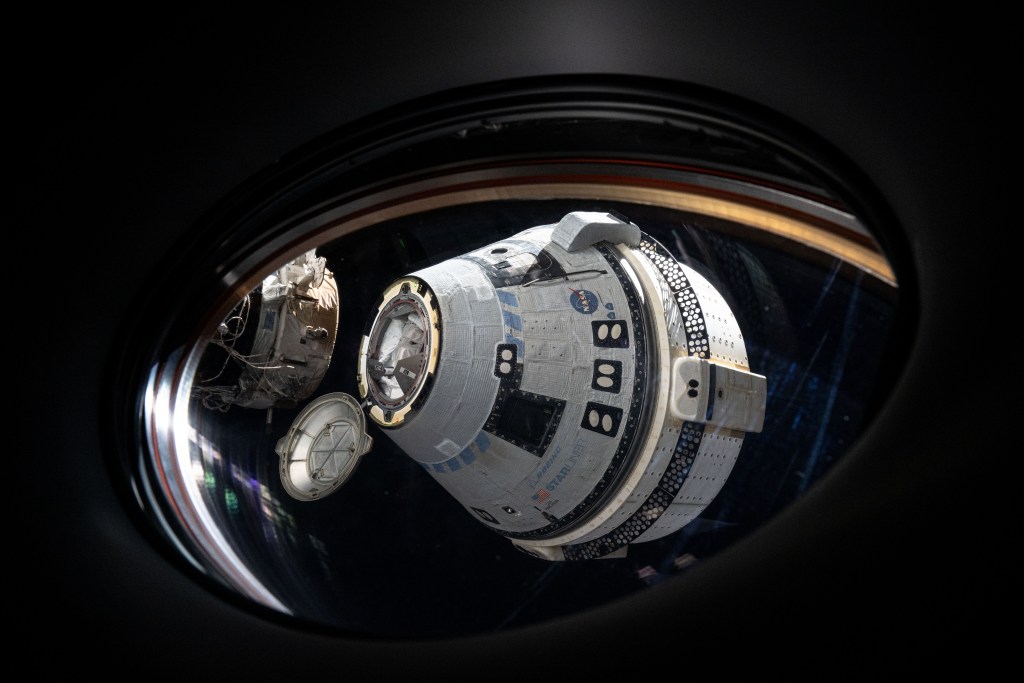
Boeing’s Starliner spacecraft departed the International Space Station in September 2024, marking the end of the Crew Flight Test mission. (Credit: NASA)
24 November, 2025
NASA and Boeing have restructured their Commercial Crew contract, reducing the number of planned astronaut flights and shifting near‑term priorities to cargo missions. Originally signed in 2014 for up to six crewed rotations to the International Space Station, the agreement has now been modified to four definitive missions, with two optional. The next flight, Starliner‑1, scheduled no earlier than April 2026, will carry only cargo and supplies. NASA officials say the uncrewed mission will validate system upgrades following the troubled Crew Flight Test in 2024, when astronauts Butch Wilmore and Sunita Williams remained aboard the ISS for nine months due to thruster issues before returning on SpaceX’s Dragon in 2025.
The adjustment reflects Boeing’s ongoing technical challenges and NASA’s need for redundancy in crew transport. Certification of Starliner remains a priority, but the delays highlight the risks of relying on aging infrastructure and illustrates SpaceX’s continued role as the primary U.S. crew transport provider.
Amazon Debuts Leo Ultra Terminal Offering 1 Gbps Satellite Internet Speeds to Compete With Starlink in Global Broadband Market

Amazon states that the Leo Ultra terminal, similar to Starlink’s, features a durable, weather‑resistant design capable of withstanding extreme temperatures, heavy precipitation, and strong winds. (Credit: Amazon)
24 November, 2025
Amazon has rebranded its Project Kuiper satellite constellation as “Amazon Leo” and unveiled new hardware aimed at enterprise customers, signaling a direct challenge to Starlink’s market position. The company introduced the Leo Ultra terminal, a phased‑array antenna capable of 1 Gbps download and 400 Mbps upload speeds, making it the fastest commercial terminal of its kind. The company claims that it is designed for durability and integration with existing networks and the system connects directly to Amazon Web Services, enabling secure private links without routing through the public internet. Amazon has already placed more than 150 satellites in orbit and plans over 80 launches to build out the constellation.
A private preview program is underway, with partners including JetBlue, Hunt Energy, and Connected Farms testing the service. Amazon’s enterprise‑focused strategy contrasts with Starlink’s consumer model, positioning Leo to serve industries requiring secure, high‑capacity connectivity. Commercial rollout is expected in 2026, intensifying competition in the satellite broadband sector.
Oman Selects Airbus OneSat for Its First National Geostationary Satellite

According to Airbus, the satellite’s adaptable design will provide high‑capacity services for government and commercial users in sectors including oil and gas, banking, broadband, maritime, and aviation, as Oman’s SCT works to expand its presence in these markets. (Credit: Airbus)
24 November, 2025
Oman has joined the growing list of nations investing in large geostationary satellites, awarding Airbus Defence and Space a contract to build its first national spacecraft, OmanSat‑1.
The deal was signed with Space Communication Technologies (SCT), Oman’s state‑owned operator leading the National Satellite Programme. OmanSat‑1 will be based on Airbus’ OneSat platform, a fully digital, reconfigurable design capable of adjusting coverage, capacity, and frequency while in orbit. The satellite will deliver high Ka‑band capacity across Oman, its economic waters, and extend service to the Middle East, East Africa, and Asia, supporting government networks, banking, oil and gas, maritime, and aviation connectivity.
The contract contributes to a rebound in GEO satellite orders, which had slowed in recent years amid the rise of low Earth orbit constellations. Oman marked its entry into the space sector last year with the launch of OL‑1, a remote‑sensing optical satellite carried by a Chinese rocket and jointly developed with local startup Oman Lens.By securing OmanSat‑1, Airbus adds to its OneSat backlog, while Oman positions itself to strengthen digital sovereignty and build national expertise in space technologies.
Northrop Grumman to Provide Final Cargo Services During ISS Deorbit Phase

The Cygnus XL spacecraft, Northrop Grumman’s largest cargo spacecraft, and equipped with twin solar arrays, is pictured in low Earth orbit from the International Space Station. (Credit: NASA)
26 November, 2025
NASA has awarded Northrop Grumman a sole‑source contract to provide cargo services to the International Space Station during its final operational phase. The agreement covers two Cygnus missions in 2028 and 2029, under its existing Commercial Resupply Services 2 contract, timed to coincide with the arrival of the U.S. Deorbit Vehicle (USDV) that will eventually guide the ISS to a controlled reentry. Once the USDV is installed, docking ports required by SpaceX’s Dragon will be occupied, leaving Cygnus, designed to berth via the station’s robotic arm, as the only viable resupply option. Beyond delivering cargo, Cygnus can also dispose of trash and perform orbit reboosts, functions that NASA cited as critical in its justification for bypassing competitive bidding.
The decision brings forth the narrowing logistics options as the ISS approaches retirement. While Sierra Space’s Dream Chaser was once slated for cargo flights, it now holds only a single test contract. NASA’s reliance on Cygnus highlights both technical constraints and the challenges of sustaining operations in the station’s closing years.
ACME Space Plans Balloon‑Rocket Hybrid for Orbital Manufacturing by 2027

A rendering of the the Hyperion Orbital Factory Vehicle (OFV) launch. (Credit: ACME Space)
26 November, 2025
ACME Space, a London‑based startup founded by Czech entrepreneur Tomas Guryca, is advancing plans for a hybrid balloon‑rocket system aimed at orbital manufacturing. Its Hyperion Orbital Factory Vehicle (OFV) is designed to lift 200 kilograms to low Earth orbit, beginning with a hydrogen balloon ascent to 30 kilometers/19 miles before a methane‑oxygen micro‑rocket separates and carries the payload into orbit. The capsule, essentially a microgravity manufacturing facility, is released at an altitude of 100 kilometers/60 miles, where it then would continue under its own propulsion to the target orbit in LEO some 300 to 500 km above Earth’s surface. The capsule, reusable up to 15 times, would return after two to three weeks with manufactured products.
The company, which won NASA’s LunaRecycle Challenge, credits AI‑aided design for cutting costs and timelines by 80%. Hardware tests are scheduled for 2026, including a drop test in Oman and a suborbital flight from the UK’s SaxaVord spaceport. ACME is collaborating with pharmaceutical firms on protein crystal growth and plans to expand into optical fiber production, targeting ZBLAN fibers previously made on the ISS.
With launch prices falling due to competitors like SpaceX’s Starship, ACME emphasizes its niche: selling orbital manufacturing capacity rather than launch services.

RESEARCH SPOTLIGHT
Subsurface "Boiling" Oceans May Exist on Icy Moons in the Outer Solar System

Cassini’s narrow‑angle camera captured this close‑up of Saturn’s moon Enceladus on July 14, 2005, showing ridged, curved faults in the southern polar region known as “tiger stripes.” The image, taken from 20,720 kilometers at a scale of 122 meters per pixel, is illuminated from the lower left with enhanced contrast to highlight surface detail. (Credit: NASA/JPL/Space Science Institute)
A new study suggests even the smallest icy moons in the outer solar system may conceal dynamic, “boiling” oceans beneath their frozen shells, reshaping how scientists view planetary geology and habitability.
Published November 24, 2025 in Nature Astronomy, the research led by University of California, Davis examined how tidal heating and ice‑water interactions could drive unusual processes on moons such as Saturn’s Mimas and Enceladus, or Uranus’s Miranda. When ice melts from below, pressure drops enough to reach the triple point of water, potentially causing subsurface oceans to boil. This mechanism may explain surface features like Enceladus’s “tiger stripes” or Miranda’s coronae. Larger moons, such as Titania, behave differently: thinning ice shells would crack before boiling occurs, producing distinct tectonic patterns.
The findings highlight how moon size governs geological outcomes and suggest that even geologically quiet bodies may harbor hidden oceans. Saturn’s moon Enceladus, among others, are known to contain liquid water oceans beneath its icy crust and rocky core, making such worlds prime locations in the solar system to search for potential extraterrestrial life.
In thermodynamics, the triple point is the unique temperature and pressure at which the solid, liquid, and vapor phases of a substance coexist in equilibrium. For water, by international agreement, the triple point occurs at 273.16 K (0.01 °C) and a pressure of 611.657 pascals (about 0.006 atm).
Scientists Explain What Fuels Venus’s Extreme Winds

Venus’s clouds sweep around the planet at over 100 meters per second, propelled by atmospheric dynamics that remain only partly understood. (Credit: Kevin M. Gill)
A new study has clarified one of the most puzzling features of Venus: its extreme atmospheric winds.
Venus’s cloud tops race around the planet at more than 100 meters per second, a phenomenon known as superrotation, where the atmosphere circles the planet about 60 times faster than the surface itself. For decades, scientists debated the mechanisms behind this, pointing to interactions among planetary waves, circulation patterns, and thermal tides. Research published in AGU Advances now suggests that diurnal thermal tides, once‑daily cycles driven by solar heating, play a far greater role than previously thought. Using data from ESA’s Venus Express (2006–2014) and JAXA’s Akatsuki (2015–present), researchers analyzed how radio waves bend through the atmosphere and modeled momentum transport. Their findings show diurnal tides channel energy toward the upper cloud layers, sustaining rapid winds.
The team modeled Venus’s atmosphere to study superrotation, focusing on thermal tides, air flows created by solar heating. These tides occur as diurnal cycles, repeating once per Venusian day, or semidiurnal cycles, repeating twice. While earlier studies emphasized semidiurnal tides, this research, including the first southern hemisphere analysis, found diurnal tides are more effective at carrying momentum to the upper cloud layers, making them a key driver of Venus’s fast winds.
Astronomers Want to Explore Binary Star System, Eta Cassiopeiae for Signs of Life

Eta Cassiopeiae is a binary system. The central bright star is Eta Cassiopeiae A, while its smaller companion, Eta Cassiopeiae B, officially named Achird, appears as a faint extension in the upper right of A’s glare. (Credit: David Ritter/Wikimedia Commons)
Astronomers are turning their attention to Eta Cassiopeiae, a nearby binary star system 19 light‑years away, as a potential site to search for habitable worlds.
Unlike many stellar systems, Eta Cassiopeiae appears to lack giant exoplanets. Astronomer Stephen Kane and his colleagues at the University of California, Riverside, suggest these planets may have been ejected early in the system’s history, leaving behind a more stable environment for smaller, rocky planets to form and persist. The absence of massive planets, or any planets farther than 8 astronomical units (1 Astronomical Unit equals Distance of Earth from the Sun) away from its main star, reduces disruptive gravitational effects, which could otherwise destabilize orbits in the habitable zone. Scientists argue this makes Eta Cassiopeiae an intriguing candidate for future surveys of Earth‑like planets.
Seen from Earth, Eta Cassiopeiae appears as a single bright star, but it is actually a binary system. The two stars orbit a common center of gravity every 472 years, with the larger being a G‑type star slightly more massive than the Sun and the smaller a K‑type star at about 57% of the Sun’s mass. The system’s proximity also allows for detailed observation with current and upcoming instruments. Although, no planets have yet been confirmed, small, Earth-sized planets may exist in the main star’s habitable zone. The findings were published in The Astronomical Journal.
Despatch Out. 👽🛸
